


Traditional medicine, such as Ayurveda and Chinese medicine, recognises the importance of harmony with nature and respecting the natural rhythm of life. Ayurveda emphasises the impact of this rhythm on our overall health. This holistic approach recognises that the natural cycles of the seasons, months and year have a significant impact on our physical and mental well-being. Simple dietary and lifestyle choices reflecting these external impacts help maintain the balanced and harmonious funtioning of our body. Aligned with the rhythm of nature, Ayurveda encourages us to adapt our daily routines – including eating habits, exercise and sleep patterns – to the changing seasons and times of day, supporting a deeper connection with the world around us and promoting optimal health and vitality.
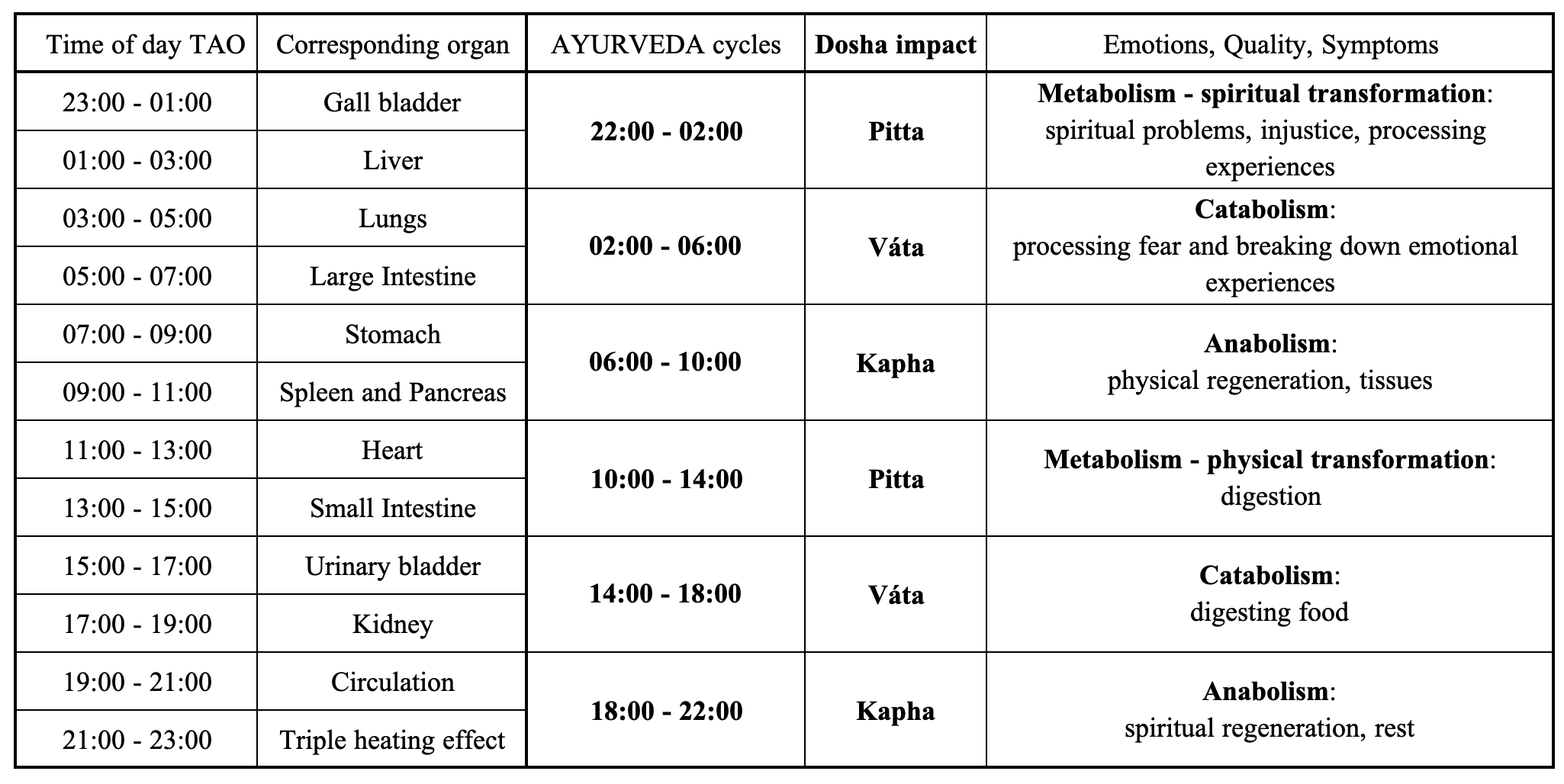
In traditional Chinese medicine and the 24-hour Qi (chi) body clock, each hour in the day corresponds with an organ and is also in harmony with the dosha energy cycles of Ayurveda. These timings can help us better understand the signals our body sends us. For example, why do we wake up at the same time every night, or what does it mean when we feel sharp pain during the day? By observing when we feel sick or experience pain, we can identify which part of our body needs our attention. It can be a good guide to better understand which organs and what energy imbalance may be behind the problem.
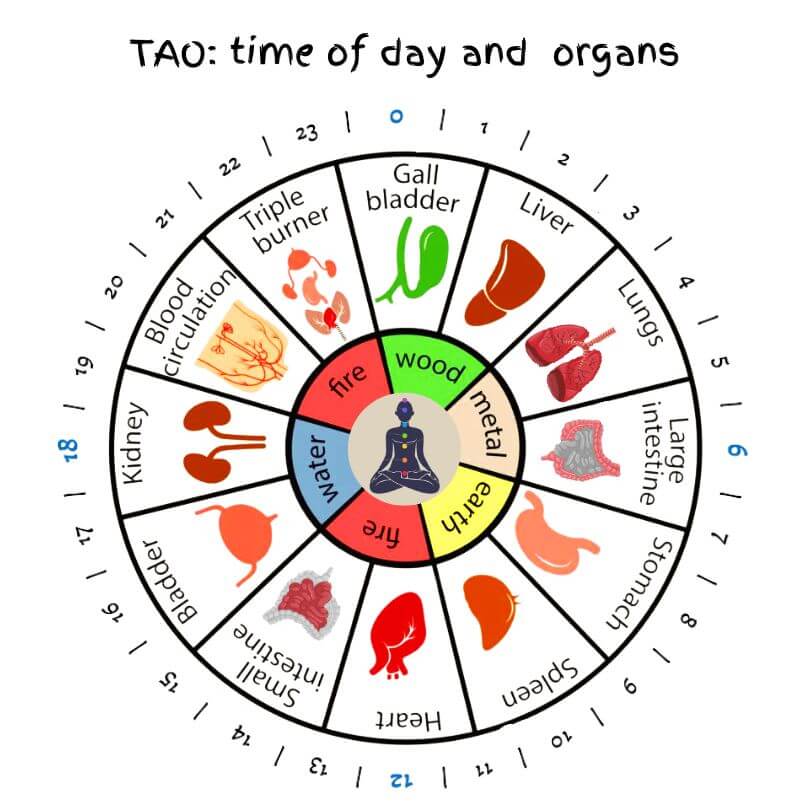

According to both Ayurvedic and Traditional Chinese Medicine principles, waking up at the same time every night can provide valuable information about your physical, emotional and energetic state. For example, in Ayurveda, waking up between 2am and 6am (when the vata dosha is active) indicates an imbalance of vata energy. You may experience restlessness, shallow sleep and troubled dreams. In traditional Chinese medicine, waking up between 1-3 AM is associated with liver problems. This may be due to an unhealthy diet, excessive alcohol consumption or feelings of unresolved anger. Each time of day corresponds to a different organ and emotional state. Understanding the relationship between the time of waking and the organs and corresponding dosha can help you take steps to address any imbalances.
From an Ayurvedic perspective, each season brings unique energies and dominant doshas that significantly affect our body and health. Spring is dominated by kapha (water) energy, where the energies are cool, wet and heavy. This can lead to an increase in kapha dosha, causing lethargy and heaviness as an example. Summer is dominated by pitta (fire), with hot, fiery and intense energies. This can aggravate Pitta dosha, causing skin inflammation, acidity and feeling irritable. Autumn is dominated by Vata (air, wind), bringing dry, windy and shifting energies. This increases Vata dosha, which can cause anxiety, fatigue and dehydration. Winter is kapha (water) time again, with cold, wet and heavy energies. This increases the kapha dosha level, which can lead to respiratory problems and lethargy. By better understanding these seasonal influences and adjusting our diet, daily routine and self-care practices, we can maintain balance and harmony in our bodies, tuning into the natural rhythm of our environment.
Sources: chopra.com, PubMed, whitetigerqigong, taoofwellness.com,