


The Sanskrit term Ayurveda means “the science of life“. The over 5000 year old holistic system of Vedic medicine is primarily focused on the prevention of illness and the natural preservation of health. The essence of Vedic medicine can be found in two main classical books, the Charaka Samhita, which discusses internal medicine, and the Susruta Samhita, which covers surgery.
A practitioner of Ayurveda with a holistic approach heals not only the affected organ or body part, but the entire human body. This means taking into account the whole person – body, mind and spirit – in relation to his or her environment and lifestyle. The health of an individual is closely related to various factors, including one’s body type (Prakriti), current imbalances (Vikriti), diet, daily routine, emotional state, relationships and external influences such as climate and seasonal changes.
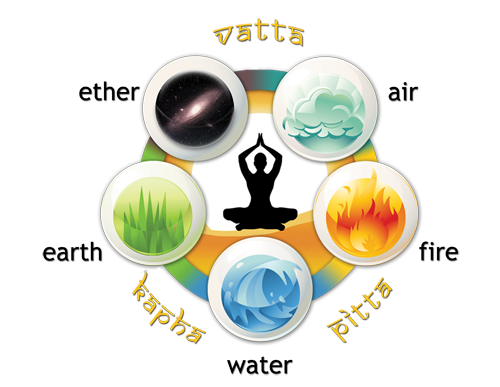
Ayurvedic healers believe that illness is caused by imbalances in the elements and energies (ether, air, fire, water, earth). Treatments and recommendations aim to address the root cause of the problem by harmonising the individual’s energies, in addition to alleviating symptoms. This may include suggested dietary changes, herbal therapy, lifestyle changes, stress management techniques and spiritual practices, all tailored to the individual’s unique needs and body type. At its core, the holistic approach of Ayurveda emphasises that to eliminate illness and maintain long-term health, balance must be restored in all areas of life: physical, mental and emotional.
This is the definition of “Ayurveda” : ayur = life, veda = science, ayuveda “science of life”
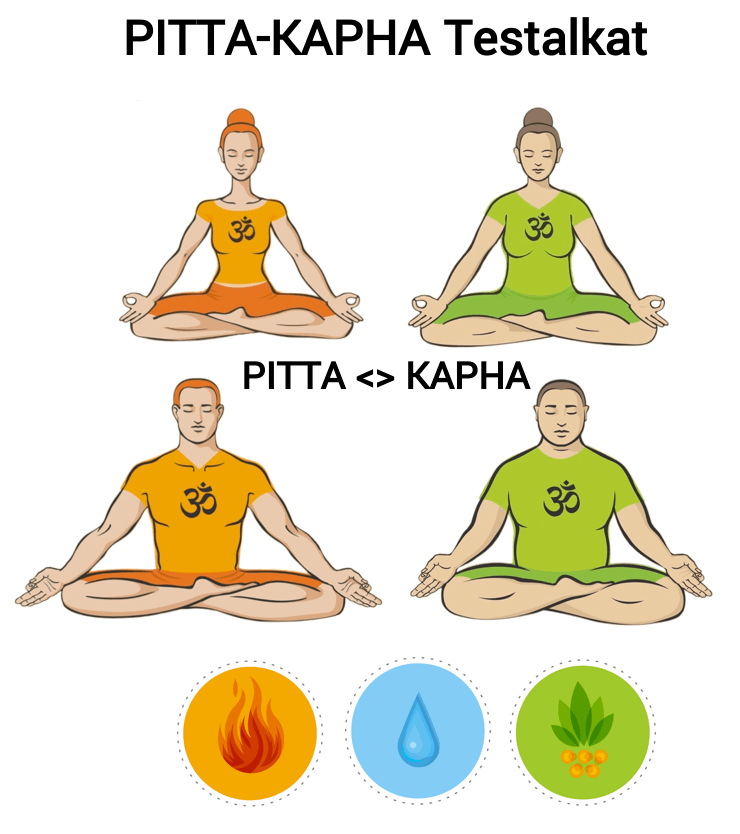
When the five elements create a biological form (plant, animal, human organism), they are transformed into biological ordering principles called doshas. There are three doshas: air and ether create the VATA dosha, water and fire elements form the PITTA dosha, and water and earth elements manifest the KAPHA dosha in living organisms.Ayurvedic medicine uniquely classifies our bodies into sub-types and helps each body maintain balance and health through nutrition, exercise and lifestyle appropriate to its sub-type.
In traditional Ayurvedic medicine, the definition of personal body type – prakriti – is of primary importance. Each person is born with a particular constitution, and it is his or her personal prakriti that determines the physical attributes, height, eye and skin colour, bone structure and remains relatively stable throughout the individual’s life. The prakriti also includes our mental characteristics, such as whether we will be reserved or more combative types. It determines what type of foods are good for us and what our metabolism is like. Find out more about your Ayurvedic body constitution: take our free online test




Traditional medicine, such as Ayurveda and Chinese medicine, recognises the importance of harmony with nature and respecting the natural rhythm of life. Ayurveda emphasises the impact of the rhythm of time, seasons and times of day on our overall health and well-being. Read more…

Ayurveda, the ancient Indian system of medicine, emphasises the importance of understanding the three main distinct life stages to maintain optimal health. These stages are fundamentally influenced by the energy of the three doshas: the vata, the pitta and the kapha, and are key to understanding how our bodies and minds change and evolve over the years. Read more…
As the seasons change, so does our body. The ancient science of Ayurveda recognises how the cycles of nature have a profound effect on our health and well-being. By adapting our daily routines, diets and self-care practices to the rhythms of the seasons, we can not only adapt to the changing environment, but also maintain optimal health and vitality throughout the year. Read more…
‘India is the only country in the world where miracles still exist because people believe in them.’
– Germanus Gyula
Living in Europe, I heard and read a lot about India, about Hindu mythology, about the mesmerising world of the East. My favourite childhood series was Around the World in 80 Days, with the adventures of Willie Fogg, who also visited Calcutta.
I moved to Mumbai (Bombay) in 2011 and realised that no description, narrative or image can capture the colourful-rich-mixed-up world that is India.
The present-past-future is present in a complex and intricately connected way.
(Erika)

Mumbai has a population of 18-20 million and an average annual income of $762 at the same time it is one of the top 50 most expensive cities in the world. In close proximity to each other, you can find families living on the street/sidewalk and luxury homes. There are plenty of Aston Martins, Rolls Royces, Jaguars and other luxury cars, along with ox-drawn two-wheelers and small handcarts that look the same as they did hundreds of years ago. In India, everything is in one place, from the desert to the Himalayas, religions of all kinds coexist peacefully in everyday life, with neverending festivals celebrating their deities – Ganpati festival in praise of Ganesha, Govinda festival on Krishna’s birthday, a story for every moment of life. Here, the thousands of years of teachings of the Vedas are told to children as bedtime stories.
Time is standing still in this corner of the world and although modernisation is slowly seeping into everyday life, life here is still much closer to nature. They eat healthier food, predominantly made of fresh vegetables. Ayurvedic medicine and preparations made from natural ingredients and spices, accompanied by a little magic and positive energy, can cure all ailments, be it snakebites, cardiovascular problems or simple vitamin C deficiency. For those who want to read more about India, I heartily recommend Gregory David Roberts’ book Shantaram, which is a very authentic account of this unique world in every respect. For those interested in Ayurvedic medicine, Hindu religion and mythology, we warmly recommend the programmes of Adam Baktai and Bhakti Kutir, where you can hear about the stories of the Mahabharata, shiatsu massage techniques, Ayurveda, Vedic astrology and psychology, spirituality and the diverse teachings of the Vedas.


