


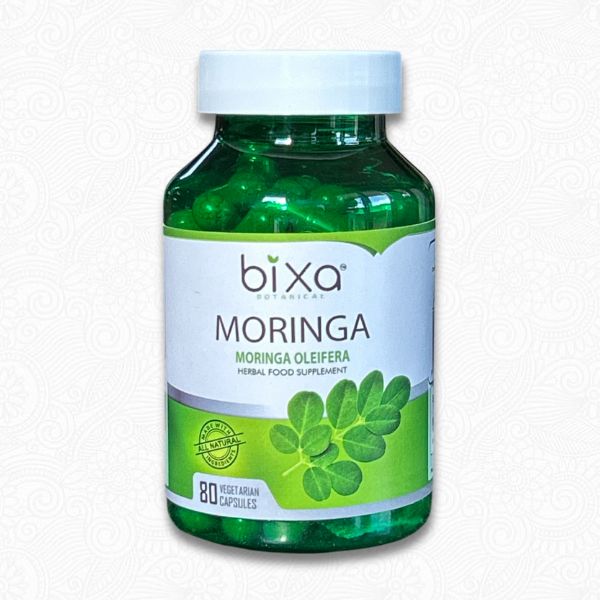



Natural source of vitamins and minerals to improve stamina
Moringa is a nutrient-rich herb used in traditional Ayurvedic medicine to increase stamina, protect joints and as a natural source of energy. Moringa is often referred to as a herbal “superfood” due to its nutritional content. It is a popular addition to smoothies, milkshakes and energy boosters worldwide, while in powder form it can be easily added to foods to enhance their nutritional value. Moringa leaves are rich in vitamins (A, C), minerals (calcium, iron, magnesium, potassium) and antioxidants. It also contains several essential amino acids, which are essential for building complete proteins. A study of the amino acid content of Moringa found 17 types of amino acids, with proportionally more than 25% of the leaf consisting of amino acids. It is also almost unique in the plant world that almost 70% of the leaf is protein!
Balancing for vata and kapha doshas. Over-consumption can aggravate pitta energy.

What is Moringa?
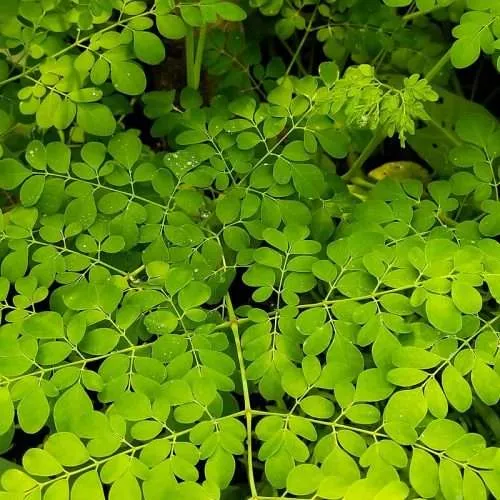
Moringa oleifera powder is made from the ground leaves of the moringa tree. Commonly known as the drumstick, horseradish or miracle tree, it is a fast-growing, drought-tolerant tree native to the foothills of the Himalayas in northwest India and is widely cultivated in tropical and subtropical regions. Known for its outstanding nutritional and medicinal value, almost all parts of the moringa plant – leaves, pods, seeds, flowers and roots – are edible and are used in traditional medicinal systems such as Ayurveda and Unani. It is used to improve stamina, fight malnutrition, support immune health and as a natural source of energy.
General effects of Moringa based on Ayurvedic observations
- Supports joint health
- Promotes general well-being, stamina and vitality
- Rich in nutrients and amino acids
- High in minerals and protein, an energising source of vitamins
Beneficial in the treatment of the following symptoms / diseases1,2
- Immune system support: natural source of vitamins (C, A, B, E, K)
- Increase stamina: rich in minerals (calcium, iron, magnesium, potassium)
- Stiffness of the joints
Energetic effects based on Ayurvedic observations
- Rasa – Taste: bitter, pungent
- Vipaka – Post digestive effect: pungent
- Virya – Heat effect: heating
- Dosha impact: pacifies vata and kapha dosha, overconsumption may aggravate pitta dosha
Product quality guarantee:
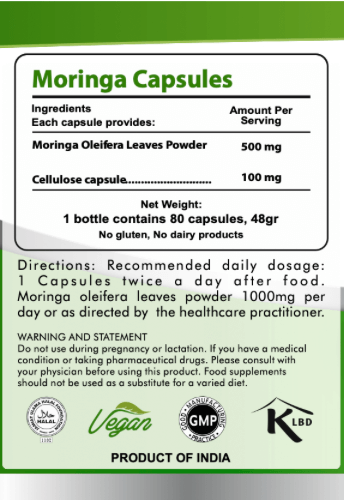
Our supplier partner in India is a certified organic producer of Ayurvedic products. All our products are 100% vegan, with cellulose capsules and Halal and Kosher certified.









Sources: 1PubMed Central, Bixa Botanical
Scientific research and publications on Moringa
There are several scientific studies on the uses and benefits of Moringa Oleifera. Studies have investigated among other things its vitamin and nutrient content, its effects on stamina and joint health. Some of these publications include:
- “Nutritional and functional properties of Moringa oleifera“, 2020 Oct, PubMed6
- “Moringa oleifera is a Prominent Source of Nutrients with Potential Health Benefits”, 2021 Aug, PubMed4
- “Moringa Leaf Nutrition”, 2024 May, NatureClaim2
- “92 nutrients and 46 antioxidants in one tree Moringa oleifera”, Amchara3
- “Soluble Extract from Moringa oleifera Leaves with a New Anticancer Activity”, 2014 Apr, PubMed
- “Phytochemicals of Moringa oleifera: a review of their nutritional, therapeutic and industrial significance”, 2016 Sep, PubMed
- “Moringa Genus: A Review of Phytochemistry and Pharmacology”, 2018 Feb, PubMed
- “Health Benefits of Moringa”, 2023 May, WebMD
- “Discover The Miraculous Benefits of Moringa: Ayurvedic Insights”, 2023 Aug, The Ayurveda Experience5
- “The protein quality of raw leaf, seed and root of Moringa oleifera grown in Rivers State, Nigeria”, 2013 Jan, ScholarsResearch7
What vitamins are in Moringa?
Moringa oleifera, often referred to as the drumstick tree, is extremely rich in nutrients, containing a wide range of vitamins and minerals that contribute to its health benefits. The leaves of moringa contain significant amounts of vitamin C (up to 278 mg per 100 g), which is vital for immune function and skin health. Moringa also contains significant amounts of vitamin A (about 378 mcg/100 g), which is essential for vision and immune support. The leaf also contains B vitamins, including riboflavin (0.66 mg), vitamin B6 (1.20 mg) and niacin, which play a vital role in energy balance and overall stamina. It also contains vitamin E and vitamin K, which further enhance its nutritional value.2,3,4
What minerals are in Moringa?
In terms of minerals, Moringa is exceptionally rich in calcium, iron, magnesium and potassium. Research has shown that it contains about 17 times more calcium than milk and about 4 mg of iron per 100 grams, making it very useful in cases such as anaemia. Moringa also contains manganese (1.06 mg), which supports bone health and metabolic processes. It also contains trace elements such as copper and zinc, which are essential for a healthy immune system and cell regeneration.3,5,6
What is Moringa good for?
Moringa is a nutrient-rich herb used in traditional Ayurvedic medicine to increase stamina, protect joints and as a natural source of energy. It contains more than 90 nutrients and 46 antioxidants.3 It also contains a number of amino acids that are essential for building complete proteins.
When is Moringa not recommended?
- In case of Hypothyroidism or Hashimoto’s disease


Reviews
There are no reviews yet