





Vata reducing ayurvedic herb
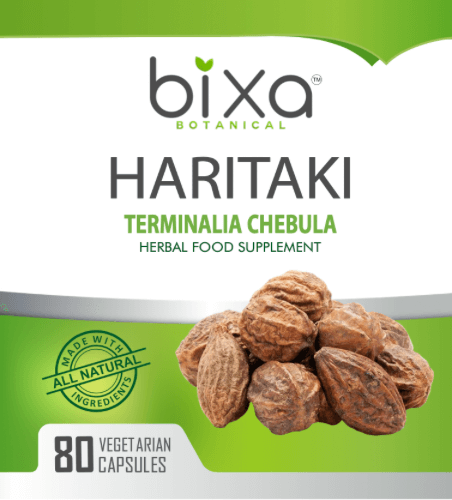
Haritaki is a cleansing and rejuvenating digestive fruit, which is widely used in traditional Ayurvedic, Tibetan and Unani medicine. Primarily used to aid digestion, improve bowel movements and promote healthy intestinal villi function. The antioxidant, anti-inflammatory and antimicrobial properties are useful for boosting immunity, treating respiratory problems and promoting general well-being. It can penetrate all seven layers of tissue, strengthening and nourishing the whole body. It is traditionally consumed in powdered form, as a tea or in combination with other herbs to enhance its effects, such as Triphala, which is a blend of three herbs: haritaki, bhibitaki and amla.
Balancing for all three doshas: rejuvenating for vata dosha, regulating kapha dosha. Overconsumption aggravates pitta dosha. It contains all six flavours except for salty. Thanks to the sweet, bitter and astringent flavours, haritaki helps to pacify excess pitta; the astringent, bitter and pungent flavours reduce kapha excess; and the sweet and sour flavours help to remove excess vata energy.
Treasured by Tibetan healers, the Healing Buddha is often depicted holding a haritaki fruit or a flowering branch of the haritaki tree.
What is Haritaki?
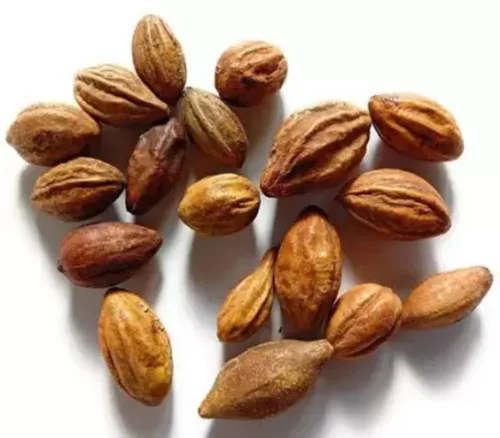
Terminalia chebula, commonly known as the black myrobalan or haritaki, is a flowering tree in the family Combretaceae, native to South Asia, including India, Nepal and Sri Lanka. The fruit contains important bioactive constituents such as tannins (chebulic acid, chebulinic acid, corilagin), flavonoids and phenolic compounds. This gives the fruit its strong bitter taste and astringent effect. Haritaki powder is made from the dried and ground fruit of the Terminalia chebula plant.
To reduce vata, take it with ghee. Consume with sugar to pacify pitta. Take with mineral salt to reduce kapha.
General effects of Haritaki based on Ayurvedic observations
- Removes excess Vata energy from the body
- Natural bowel cleanser, removes undigested food waste
- Supports healthy metabolic function
- Stimulates digestion, improves appetite
- Supports proper functioning of the colon, liver and lungs
- Strengthens and nourishes tissues, rejuvenating
- Mucolytic, astringent, mildly laxative
- Nerve tonic
- Cholesterol-lowering: helps remove waste deposits from tissues
Beneficial in the treatment of the following symptoms / diseases1,2
- Vata-type digestive problems: gas, bloating, varying appetite
- Kapha type cough, wheezing, asthma
Energetic effects based on Ayurvedic observations
- Rasa – Taste: astringent, bitter, pungent, sweet, sour
- Vipaka – Post digestive effect: sweet
- Virya – Heat effect: heating
- Dosha impact: tridosha, specifically reduces vata and kapha dosha
Product quality guarantee:
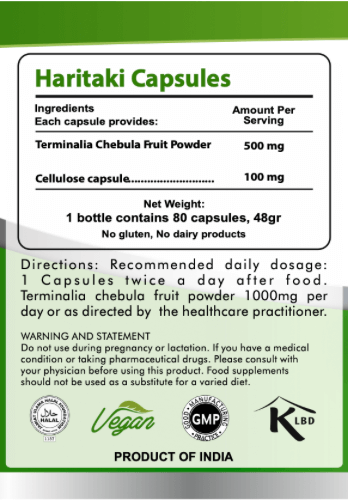
Our supplier partner in India is a certified organic producer of Ayurvedic products. All our products are 100% vegan, with cellulose capsules and Halal and Kosher certified.










Sources: 1Dr David Frawley Ayurvedic Healing, 2Sebastian Pole Ayurvedic Medicine, 3Patnaik Garden of Life
Scientific research and publications on Haritaki
There are several scientific studies on the use and benefits of Terminalia Chebula. Studies have investigated among other things its effects on digestion, cholesterol levels and lung health. Some of these publications include:
- “A review of Haritaki (terminalia chebula) and its pharmacological actions”, 2022 Jan, ResearchGate
- “A Critical Review of Pharmacological Actions of Haritaki (Terminalia chebula Retz) In Classical Texts”, 2023 Jan, ResearchGate
- “Biological and pharmacological properties of Terminalia Chebula retz. (Haritaki)- An overview”, 2011 Sep, ResearchGate
How to use Haritaki all year round?
“As a tonic to promote and prevent the effects of ageing, chebulic myrobalan [Haritaki] should be taken every morning with salt in the rainy season, with sugar in autumn , with ginger in the first half of winter, with long pepper in the second half of winter, with honey in spring, and with syrup in the hot months. “3
When is Haritaki not recommended?
- During pregnancy
- In case of severe fatigue, dehydration or emaciation
- Pitta excess


Reviews
There are no reviews yet